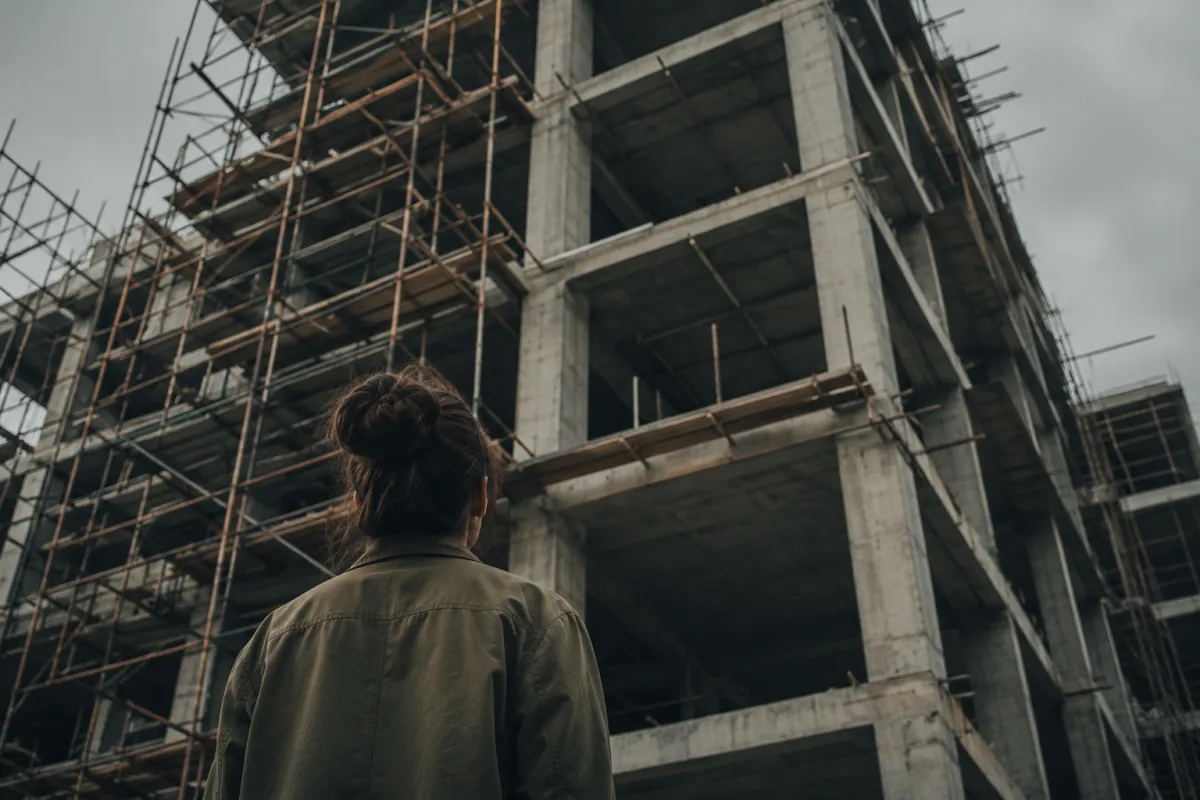
What If You're Not Supposed to Be Your Own Architect?
There's a version of self-improvement that most serious people eventually hit a ceiling on.
Not the shallow version — the one that's just productivity hacks and morning routines. The serious version. The kind that involves real work: therapy, honest self-examination, rebuilding after failure, the long slow project of becoming someone worth being.
That version takes real effort. And it produces real results.
Up to a point.
The ceiling I'm describing isn't obvious when you hit it. It doesn't announce itself. You just notice slowly, over time, that the work you've been doing keeps delivering less than it used to. The insights are real but they're not landing anywhere. The frameworks make sense but they don't hold. You're building carefully, choosing wisely, and the question underneath everything is still open.
Who am I, actually?
I spent most of my adult life as my own architect. I was good at it. I built things — a career, a reputation, a version of myself that functioned reasonably well and looked coherent from the outside.
What I couldn't build was an answer to that question.
Here's what I've come to think, and I offer it carefully because I know how it sounds:
There might be a structural reason the project keeps stalling.
Every approach to identity — every serious framework, every honest philosophy, every thoughtful self-help book — has one thing in common. They put you in charge of the outcome. You're the architect. The answer is yours to construct. Which feels right, because you're a capable person and capable people build things.
But here's the problem with being your own architect:
A building can't tell you where to build it.
You can design the most thoughtful structure imaginable, measure everything carefully, choose the right materials, work with real skill, and still have no idea whether you're building on solid ground or sand.
The architect decides everything about the building. The building can't decide anything about the ground it stands on.
That's not a flaw in your design. That's the limit of what design can do.
The thing I eventually ran into — and I want to be honest that I didn't go looking for it — was the possibility that who I am isn't something I construct at all.
That it's something I receive.
From somewhere outside the room.
I know that's uncomfortable to sit with. It was uncomfortable for me too. It implies giving something up — the quiet, exhausting work of being your own final authority. The project you've been running for years.
But here's what I've noticed, looking back:
The exhaustion I was carrying wasn't the exhaustion of someone who hadn't worked hard enough.
It was the exhaustion of someone doing a job that was never his to do.
I'm not asking you to decide anything about that today.
I'm just asking you to sit with one question for a minute:
What if the reason the project keeps stalling isn't that you're doing it wrong — but that it's the wrong project entirely?
That question, if you're willing to follow it, leads somewhere worth going.
The next post in this series goes deeper on what that somewhere looks like.
If this resonated, the free guide — "Why You're Still Stuck" — covers the structural reasons the search keeps stalling. It's short, honest, and won't preach at you. You can get it here.
